Feet First: How the Standing Ovation Became Britain's Default Response
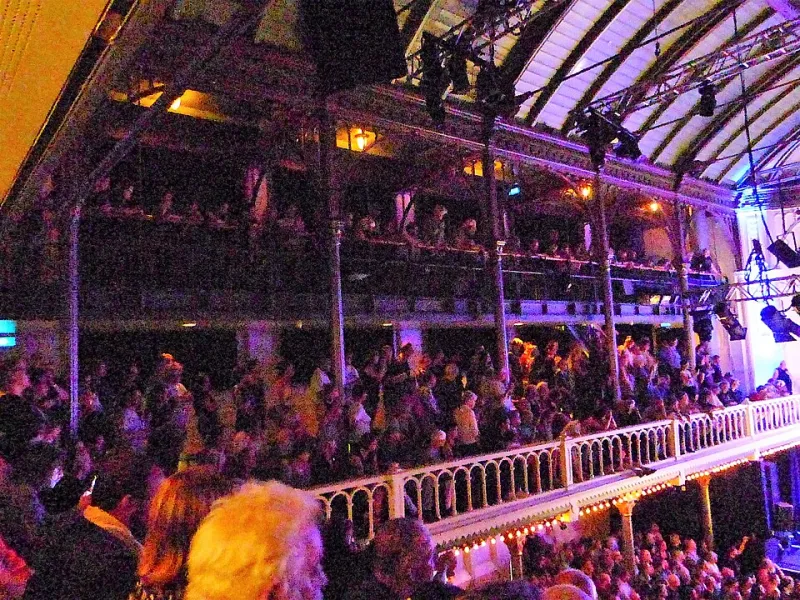
Photo: Elekes Andor, CC BY-SA 4.0, via Wikimedia Commons
Tuesday night, mid-October, a touring musical in a 900-seat house twenty minutes off the M6. The first act had two genuinely good numbers, a sound mix that swallowed a verse and a half, and a set that looked as though it had been designed for somewhere larger and had never quite forgiven the tour for it. Then the curtain call. And up they went — a block of thirty in the stalls, then the dress circle, then that very British ripple of half-rises and sideways glances until the room decided it had committed.
Nobody in that building would have called it a great show. It got a standing ovation anyway.
This is where we are in 2026, and it is worth asking what we have done to ourselves.
The verdict that stopped being a verdict
A standing ovation used to be evidence. It meant something had happened in that room — a first night that clicked, a performance that tipped past the ordinary, a star turn nobody would forget. Ask anyone who was going to theatre regularly in the 1990s and they will tell you they could count their standing ovations on one hand. Ask a regular now and they will tell you they were on their feet four times last month, once for a play they openly describe as 'fine'.
The change is not mysterious. Some of it is generosity, and genuinely lovely generosity at that. A first preview audience knows it is watching something unfinished, and it claps the effort rather than the result. A midweek matinee in November is full of people who have paid £70 and want the afternoon to have been worth it. A touring company on a one-nighter in a half-full house has worked hard and everyone can see it.
But somewhere along the line, standing up stopped being a response and became a formality — the theatrical equivalent of saying 'you're welcome' before anyone has said thank you.
The clip is the point
Ask anyone who works front of house and they will point at the same culprit: the phone.
Diane, an usher at a North West venue who has been tearing tickets for nineteen years, puts it bluntly. 'You can see it start. Someone in row F wants the curtain call for their grid, so they stand up to get a cleaner shot, and then the people behind them stand up because they can't see, and by the time the company takes the third bow the whole stalls has gone up like a wave.'
That wave is now the thing being filmed. The clip that goes out at 11pm is not a clip of a brilliant performance; it is a clip of a room being emotional, which is a subtly different product. And once an audience knows it is part of the footage, it performs.
What the critics are watching
Critics notice, and most of them are quietly irritated. Not because they dislike enthusiasm — most of them would kill for a room that enthusiastic — but because the ovation has stopped being information they can use.
'There was a time when you could walk out of a press night and read the temperature of the room,' one regional theatre critic told us. 'If they were up on their feet before the last chord died, that was a signal. Now the signal is noise. I've sat through opening nights where the ovation was thunderous and the chat in the bar afterwards was brutal.'
There is a particular piquant irony in the press night, which is arguably where the inflation began. Opening nights are full of people who know someone involved, or who are being extremely visible about enjoying themselves. The ovation on a first night is often less a review than a form of social insurance.
The case for getting up anyway
It would be easy, and wrong, to write this off as pure decline. There is a real argument that the automatic ovation is a small, decent act of collective kindness in a country that has otherwise become quite bad at expressing enthusiasm in public.
Theatre has also widened its audience considerably. People who did not grow up knowing the rules now come to venues that used to feel like members' clubs, and they bring their own way of showing appreciation — louder, warmer, less worried about whether it is tasteful. Some of that is simply a more democratic room, and the purists who mourn the days of polite seated clapping are mourning something that was also, frankly, a bit chilly.
And a company on the road, doing eight shows a week in a different city every night, will tell you that a room on its feet, even a room that is only standing because everyone else is, is not nothing. It buys morale. It buys people through Wednesday.
A modest proposal
Still, meaning depends on contrast. If everything is an ovation, nothing is.
So here is a small suggestion for 2026, offered entirely without authority: treat the standing ovation as you would a decent bottle of wine. Keep it for the occasions that deserve it. Sit through the perfectly good show on a wet Tuesday in November and clap warmly, generously, properly — and then sit down, put your coat on and go home happy. Save your feet for the nights that leave you no choice.
Because the standing ovation is a limited resource. Spend it every week and the extraordinary becomes indistinguishable from the adequate, and the people on that stage — who can tell the difference even if the room can't — will know exactly what they have been given.