Please Return to Your Seats: The Interval Deserves a Second Act
At 8.47pm on a Thursday in a West End house, the lights come up and the audience does what audiences have done for generations: it hesitates, then bolts. Half the row is already reaching for coats, bags and the aisle. Someone has pre-ordered drinks. Someone else is calculating whether the toilet queue or the ice-cream queue is the lesser evil. A bell will ring in twenty minutes, and a thousand small social negotiations will take place before it does.
The interval is easy to mock. It is also easy to cut. A tight ninety-minute play with no break can feel like a gift: no shuffling, no queue, no lost momentum, home before the last train. But the interval is not just a pause in the evening. It is a piece of theatre architecture, a commercial engine, a social ritual and, at its best, a deliberate part of how a show works on an audience.
A very British pause
The interval is not a modern invention, and it is not uniquely British. Victorian and Edwardian theatres needed time to change substantial scenery, and audiences needed time to see and be seen. Music halls built their evenings around turns and breaks. Repertory companies and touring houses inherited the habit, and the three-act play with a midway pause became a familiar shape for UK audiences.
What lingers is the vocabulary. We call it the interval, not the intermission. We talk about the bar, the ice cream, the bell, the second half. In regional theatres and West End houses alike, the interval is written into the evening's choreography: the front-of-house staff deploy, the kiosks open, the lights stay half up, and the auditorium becomes a different kind of room.
That is worth noticing. The interval is not a clerical error in the running time. It is a designed break, and like any design choice, it can be done well or badly.
The economics of a choc ice
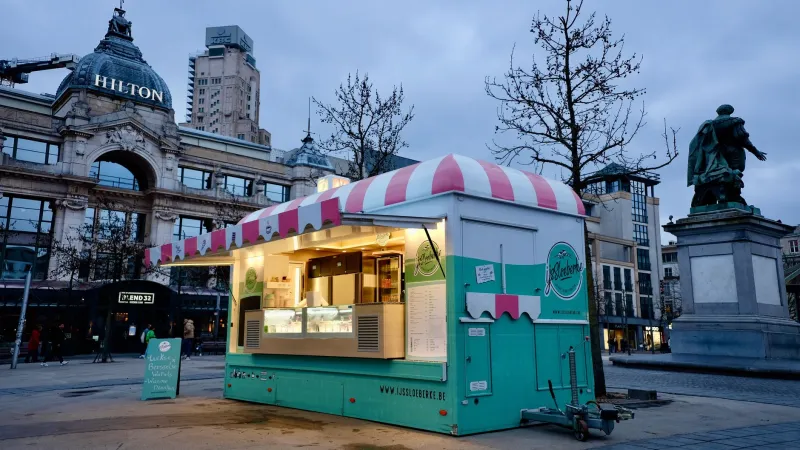
Ask a producer about intervals and you will eventually hear about the bar. Interval takings can be significant, especially in older theatres with limited front-of-house space and a captive audience. Ice cream, programmes, drinks, snacks, merchandise: the interval is a secondary market, and for some venues it helps balance the books. A tub of ice cream is not a business model, but it is not nothing.
There are costs too. Staffing, overtime, cleaning, the later finish, the train times. Shorter, interval-free productions can be marketed as a clean night out: in by 7.30, out by 9, no scramble for the last Tube. For touring shows, a no-interval running time can make a one-nighter more practical. For audiences with babysitters or long journeys home, it can be a genuine relief.
So the decision is rarely artistic purity versus greed. It is a negotiation between momentum, money, access and stamina. A well-placed interval can boost the night; a poorly placed one can deflate it. The trick is not to pretend the break is invisible. The trick is to make it earn its place.
The aisle dash and other rituals
The interval has its own etiquette, and most of it is unspoken. The aisle seat is suddenly valuable. The person who stands up first sets the pace. There is the apologetic shuffle, the half-smile, the quiet negotiation over whether someone is coming back. There is the queue that looks shorter until you realise it is not moving, and the pre-order trick that separates the prepared from the hopeful.
Then there is the bell. That sound does something to a room. It turns a loose crowd back into an audience. People finish sentences, gather coats, check phones one last time. The ushers appear. The doors open. The house lights dip. The second act begins.
In a good interval, strangers talk. They disagree about the first act. They wonder what happens next. They recommend a restaurant. They complain about the seats. They are, briefly, an ensemble. Theatre is live because it is shared, and the interval is the part of the evening where the sharing becomes explicit.
Directors, momentum and the pause that is not dead
Directors have a complicated relationship with the interval. Sometimes it is essential: a major scene change, a shift in time, a reset that needs the audience to breathe. A well-placed break can make Act Two feel like a fresh start rather than a continuation. It can give a heavy play room to settle, or let a comedy release its tension before winding up again.
Sometimes it is a nuisance. A show that is building relentless momentum may resent the interruption. A ninety-minute play with no interval can feel like a single held breath, and that can be thrilling. The interval-free show is not the villain of this story. It is a choice, and sometimes the right one.
But the choice is worth making consciously. An interval is not automatically conservative, and its absence is not automatically modern. What matters is whether the evening needs a pause, and whether the audience is being given the conditions to enjoy it. A badly timed interval can kill a show. So can a breathless running time that leaves no room for the audience to arrive at the second half.
What we lose when we skip the break
There is a practical case for the interval that is often left out of the artistic conversation. For some audience members, it is not a luxury; it is the difference between attending and not. A toilet break, medication, a stiff back, a child in the row, a train to catch: the interval is an accessibility feature as much as a social one. Remove it and you narrow the room.
Then there is the softer loss. The interval is where the play continues in the foyer. It is where you hear the line someone else laughed at, or the interpretation you missed. It is where a first date finds something to say. It is where the night out becomes a night out, rather than a sprint from curtain-up to car park.
Not every show needs an interval. Not every interval is well used. But when we treat the break as dead time, we forget that theatre is not only what happens under the lights. It is also the queue, the bell, the choc ice, the argument at the bar and the shared shuffle back to your seat.
So when the bell goes, go back in. The second act is about to begin, and the interval has been part of the show all along.