Pillars, Overhangs and the £12 Gamble: How to Hunt a Perfect View in a UK Theatre
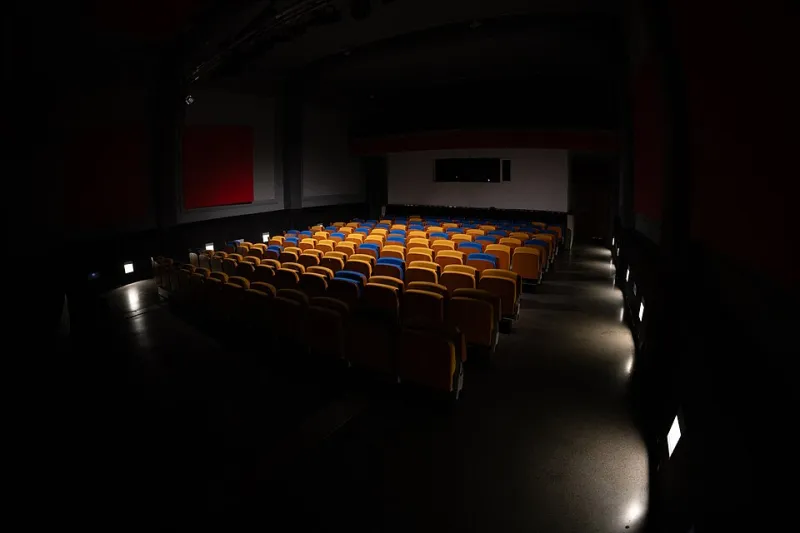
Photo: JJxFile, CC BY-SA 4.0, via Wikimedia Commons
There is a particular sound a UK theatre makes when somebody realises what they have bought. It is not a gasp. It is a small, flat 'oh.' They have found their seat, sat down, looked at the stage, and discovered that a cast-iron pillar from 1897 is now the co-star of the evening.
We have all been there. And yet some people never are. Every house in the country has a handful of regulars who reliably sit in the cheap band and reliably see everything — no craning, no leaning into the aisle, no watching Act Two through a gap the width of a paperback. They are not luckier than you. They just know how sightlines work.
What 'restricted view' actually means now
In 2026 the label has become a catch-all, and that is half the problem. A restricted view note on a booking page can mean anything from 'a safety rail passes across the back of the set for roughly eleven seconds' to 'you will be watching the show side-on, like a linesman'.
Most UK venues work from a handful of informal grades. There is the true side view, where you lose whichever corner of the stage is furthest from you and gain a fascinating insight into what the wings look like. There is the overhang seat, tucked under the circle, where the top third of the set is a rumour. There is the pillar seat, the slip seat behind the lighting box, and the back-row seat where a low ceiling clips the upper half of the stage. Some houses also flag 'partial view' separately for seats that lose a specific corner; others simply slap 'restricted' on the lot and let you work it out.
What has genuinely changed is transparency. A growing number of venues now publish sightline photographs taken from individual seats, and the better box offices will tell you honestly which seat in the cheap band they would take themselves. Seat-review sites, where audiences upload a photo from their actual seat, have become a genuinely useful research tool rather than a novelty. The information is out there. The catch is that it is scattered, inconsistent, and often buried three clicks deep.
The anatomy of a bad seat
Learn the geography and you can predict most problems before you pay.
Victorian and Edwardian houses — the grand old reps, the touring dates with the ornate ceilings — almost always have columns. They were built for music halls and variety, not for a single fixed-ish set with a revolve. In these buildings the cheap seats in the upper levels are frequently magnificent, and the cheap seats at the extreme sides of the stalls are frequently terrible.
Modern houses have the opposite personality. No pillars, better rake, but deep circle overhangs that slice the top off the stage. If a theatre was built or rebuilt after the 1970s, the danger zone is usually the back half of the stalls under the balcony, where you can hear perfectly and see two thirds of the design.
Other things worth checking before you commit: whether the production is a thrust or in-the-round staging (which changes everything — the cheap corner seat of a proscenium layout can be a superb seat when the stage pushes out); whether the show relies on surtitles or projections high on the set; and whether there is a safety rail at the front of the circle, which will sit precisely across the eyeline of anyone shorter than about five foot six.
Chasing the unicorn
The unicorn seat is not a myth. It is a full, clean, comfortable view at a price that makes the person beside you quietly furious. They exist, and they tend to hide in the same places.
The back two rows of the stalls in a modern house are often the best-value seats in the building — far enough back to see the whole design, close enough to feel it, and priced in the bottom band because audiences assume distance equals deprivation. The front row of the circle, offset by three or four seats from centre, is another perennial. So is the aisle seat three rows from the back of the upper circle, provided the ceiling is not low.
In older houses, look at the front row of the slips and the boxes if they are sold as standard seating: awkward, often cheaper, and sometimes startlingly good. And never overlook the humble restricted seat for the right kind of show. A dance piece or a gig-style musical can survive a severed corner. A wordy two-hander with a revolve and a lot of upstage business cannot.
A field guide to ask before you book
- Check the stage shape first, then the seating plan. A thrust changes which seats are actually restricted.
- Look for the overhang line. If the circle above you extends past the fifth row of the stalls, be suspicious.
- Front row is not automatically best. In a low-stage house it means a night of looking up someone's nose.
- Ask the box office directly: 'Which is the best seat in the cheapest band?' It is a fair question and they answer it all day.
- Buy early. The good cheap seats are the first to go, not the last.
The £12 gamble
Sometimes you take the risk. You buy the seat with the little warning triangle, you sit down, you look at the stage, and you find that the pillar is exactly where you would have put your coat anyway. That is a good night out at a third of the price, and it is one of the small, unglamorous pleasures of British theatregoing.
Just do the homework first. The unicorn is out there — usually two rows from the back, four seats off centre, and about fourteen quid.