The Other Side of the Glass: What a Theatre Box Office Still Knows in 2026
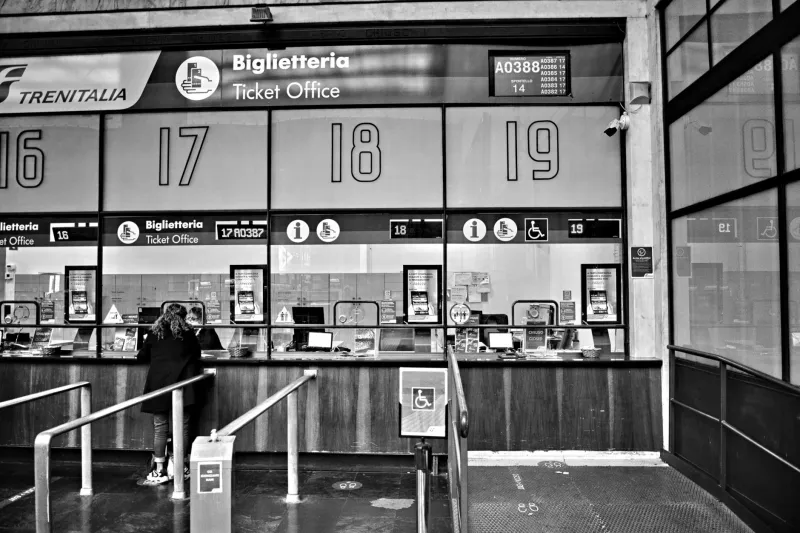
The pane of glass that still talks
At five to ten on a Tuesday morning, the box office at a regional theatre is already awake. The shutters are up, the card machine is humming, and someone is trying to remember whether the third seat in row K is the one with the pillar or the one with the radiator. Online, the show has been on sale for months. In the building, the window is about to open.
In 2026, most of us book theatre tickets the way we book train seats: quickly, on a screen, preferably while doing something else. That is fine. It is convenient, it is often cheaper, and it means a Friday night at the theatre no longer begins with a queue on the pavement. But the box office window has not become decorative. It has become the place where the awkward questions get answered by a person who has actually stood in the auditorium.
What the seating plan cannot tell you
A seating plan will show you a seat. It will not always tell you that the seat is behind a safety rail for the first half of act one, or that the sound desk blocks the view every time someone walks down the aisle. It will not mention that row A is brilliant for legroom and terrible for neck ache, or that the cheap seat in the corner is genuinely good value unless the production has a revolve and half the cast spend the evening facing the other way.
This is where box office staff earn their keep. They know the difference between a restricted view and a mildly annoying view. They know which side of the circle catches the draught, which aisle seat is really an aisle seat and which one is a wall with a number on it. They can also tell you, without drama, whether the show is likely to work for a nine-year-old, a theatre first-timer or someone who needs to leave promptly for the last train.
That kind of knowledge is not nostalgia. It is customer care with a seating plan attached.
Returns, exchanges and the quiet diplomacy of the window
Ask anyone who has worked front of house and they will tell you that the box office is less about selling tickets than about managing expectations. A sold-out Saturday night is never really sold out. It is a living thing made of returns, illness, weather, train strikes and the occasional party of four who realise they have booked the same night as a wedding.
The window is where that gets sorted. Staff will take returns when policy allows, exchange dates when the show permits it, and explain the difference between a refund and a credit note without making you feel like a nuisance. They will also do the delicate work of releasing last-minute seats that have been held for production, access or group bookings. Sometimes those seats appear online. Sometimes they appear at the window first, because someone has walked up and asked.
In 2026, many theatres have made returns and exchanges more flexible than they were a decade ago, partly because audiences expect it and partly because empty seats help nobody. But flexibility still needs a human to apply it. A screen can offer a policy. A person can look at the clock, the cast list and the weather and decide whether a swap is sensible.
The morning queue is not dead
There is still a particular ritual to buying theatre tickets in person. The day-seat queue for a big London show, the Friday morning rush at a regional producing house, the pub theatre where the box office is a corner of the bar and the person selling tickets is also the person who will later check your coat. These are not relics. They are part of how theatre remains a social art form rather than a purely transactional one.
At smaller venues, the window often doubles as a front desk. Regulars ask about next season. Tourists ask whether the show is suitable for their parents. Someone asks if there is a step-free route to the toilets. Someone else asks if the theatre has a returns list because they have come all the way from Leeds on the off-chance. The box office staff answer all of it, usually while printing a ticket for someone who has not quite mastered the QR code.
The economics behind the glass
None of this is to pretend the box office is a charity. Ticket income is the lifeblood of most UK theatres, and the window sits inside a complicated machine of dynamic pricing, agency allocations, membership schemes and booking fees. Staff are under pressure to sell, to upsell, to record data and to explain why the best seat in the house costs more on a Saturday than a Wednesday matinee.
But the window also reveals what the spreadsheet cannot. It shows which shows are being bought by schools, which are attracting first-timers, which have an audience that needs captioned performances or relaxed conditions. It is where access bookings get handled with care, where companion seats are confirmed, where someone can ask for a seat near the exit without having to explain why. In 2026, that information is gold. It helps theatres program better and sell more honestly.
When to walk up rather than log on
The practical advice is simple. If you need a genuinely restricted-view recommendation, ask a person. If you are booking for a group with mixed needs, use the phone or the window. If a show is sold out and you are local, ask about returns rather than assuming the website has the final word. If you want to exchange a ticket and the online system says no, it is still worth asking politely. If you are buying a last-minute seat, remember that not every release goes straight to the app.
And if you are passing a theatre in the afternoon, stick your head in. The window is usually open. The person behind it has probably seen the show more times than you ever will, knows which seats are worth the money and which are not, and can tell you whether the interval ice cream is worth queuing for. That is not a small thing. It is the human side of buying a ticket, and in 2026 it is still part of what makes a night at the theatre feel like a night out.