The Drop Nobody Claps For: A Field Guide to the Safety Curtain
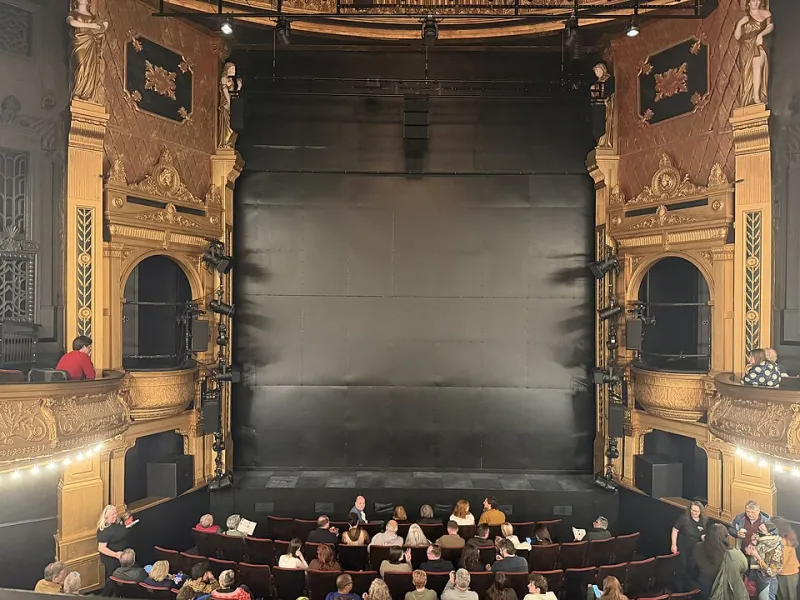
Photo: Microchip08, CC BY 4.0, via Wikimedia Commons
You have seen it a hundred times and possibly never looked at it. Two minutes before the half, or just before the show, a heavy grey-black sheet descends in front of the stage, pauses, and rises again. The audience keeps talking. Somebody in row H checks their phone. Then the house lights go down and the play resumes.
That is the safety curtain, and it is the single most consequential object in any UK theatre. It is also the one nobody claps for.
Two minutes before the half
In a mid-scale receiving house in the East Midlands, the technical stage manager — call her Nadia — runs the same sequence eight times a week. The cue comes over the show relay, the winch motor engages, and a piece of stage machinery weighing the best part of a tonne travels from the grid to the deck in a controlled fall that looks far more casual than it is.
'People think it's a bit of housekeeping,' she says. 'It's the one moment in the evening where the building proves it can save everybody's life. That's what it is. Every time it drops, we are testing the fire barrier. If it jams, we don't open the house.'
That is not hyperbole. Licensing authorities take a dim view of a venue whose fire barrier cannot be relied upon, and a failed drop can mean cancelled performances until an engineer has been in.
Why Britain got serious about a piece of iron
For most of the nineteenth century, theatres burned down with grim regularity. Timber, canvas, gas lighting, thousands of people in a room with limited exits and a stage that functioned as a chimney.
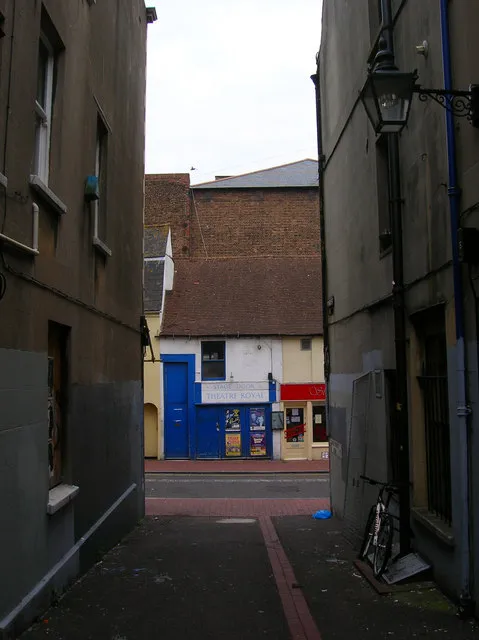
The turning point was Exeter. On 5 September 1887, a fire broke out in the fly area of the Theatre Royal during a performance; 186 people died, many of them trapped in the gallery. The subsequent inquiry was damning, and its consequences shaped theatre buildings for the next 140 years: more exits, better escape routes, and a barrier between the stage and the auditorium that could be dropped in an emergency.
That barrier is why the thing is still sometimes called the iron curtain, long after the Cold War gave the phrase a different life. The Victorians meant it quite literally.
Iron, asbestos and a naming problem
Here is where theatre people get prickly, so let us settle it.
The safety curtain — also called the fire curtain, the iron, or the main curtain — is the fixed barrier at the proscenium line, permanently installed in the building and forming part of its fire strategy. It is not scenery. It cannot be borrowed for a design concept. It must not be used as a backdrop, blocked by a set, or propped open because it is in the way of the get-in.
A fire curtain is the term many buildings use for the same thing, though some technicians reserve it for the touring or temporary equivalent. The distinction that matters is between the safety curtain and any other curtain: the burgundy velvet you see sweeping in at the top of act one is a tab, a border, a rag. It has no fire rating and no legal duties.
Modern safety curtains are steel or a rigid fire-rated composite, with guide rails down each side and a floor seal that beds into the deck. Older ones occasionally contain asbestos, which is exactly as much of a headache as it sounds and is managed under a register nobody wants to look at.
The nightly check
Before every performance, the drop happens in view of the audience. That is deliberate: it demonstrates to a room full of people that the building's principal fire barrier works. The timing is recorded. If the curtain hesitates, if it runs fast, if it catches on a rail, it goes in the log and often to the duty manager.
Beyond that there is annual inspection and, in many venues, a full test to a measured standard carried out by a competent person. The mechanics are surprisingly dramatic from the wings: counterweight cradles, and in some houses a drencher system above the stage that releases a film of water across the proscenium — a fire curtain's noisier cousin, which on test days has been known to soak an unlucky flyman.
Nadia's favourite detail is the smell. 'Every old house has it. That dust-and-metal smell when the curtain goes out. Audiences get a whiff of it and think it's the dry ice.'
The gap that does the work
A detail most people miss: the safety curtain does not need to touch the floor to do its job in the first moments of an incident, and it must not be obstructed if it needs to complete its travel. The barrier has to close the proscenium aperture entirely — top, sides and bottom — which is why set designers are asked, politely and then firmly, to keep scenery clear of the line.
That is also the reason a dropped safety curtain is not a pause button. When it goes down in a real emergency, the cast and crew on the stage side are cut off from the auditorium, and the evacuation routes they use are entirely different from yours. Which is why the interval drop still matters: it rehearses the building, not just the machinery.
Look up next time
So at your next show, when the grey sheet comes down and the room carries on chatting, watch it. Watch it settle. Notice the tiny bounce at the bottom of the travel. That is a Victorian fire regulation, a ton of steel, a logged test and roughly a dozen people's professional pride, all doing a job in under a minute for an audience that will not remember it happened.
It will never get a curtain call. It has earned one.