The Chalk Line and the Chorus: A Saturday Morning in the Panto Children’s Audition
The studio smells of floor polish and faintly of hairspray. At 9.15 on a Saturday morning in late September, a queue stretches past the stage door of a regional theatre: children in leggings and hoodies, parents clutching reusable coffee cups, a few grandparents doing the heavy lifting on the pavement. A handwritten sign on the door reads Panto Children’s Auditions — Please Sign In. Nobody is being dramatic about it, which is somehow more nerve-racking than if they were.
This is the annual ritual that turns local children into part of a professional pantomime company. The show itself will open in December, packed with slapstick, a pop medley and a Dame who has already been fitted for three wigs. But the work that makes the chorus look effortless starts here, in a room with a chalk line on the floor and a piano that needs a tune.
The Queue Outside the Studio
A member of the theatre’s admin team moves down the line with a clipboard. Names are ticked. Heights are estimated. A licence coordinator asks parents for dates of birth and school years — not to be nosy, but because child performance licensing is a serious business. In the UK, children appearing in professional theatre need a licence from the local authority, and the theatre has to prove that rehearsals and performances fit around school, with proper breaks, tutoring and chaperoning. The panto may be silly, but the compliance is not.
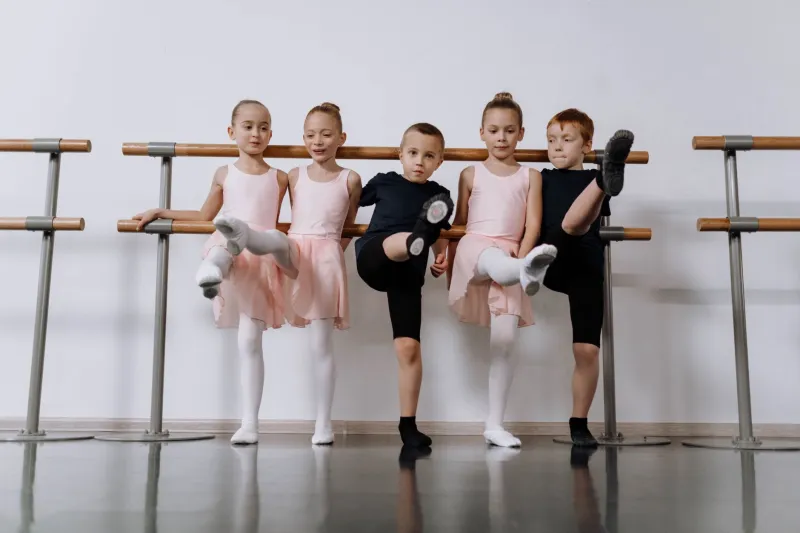
By 9.25, roughly 60 children are sitting cross-legged on the studio floor. One girl is practising a shuffle-step under her breath. A boy in a football shirt is quietly reading a Beano. Two friends are giggling at something on a phone until a chaperone asks them, very politely, to put it away. The mood is not X Factor. It is closer to a school sports day: hopeful, slightly chaotic, and held together by adults with lanyards.
The theatre’s panto director — a touring veteran who has directed more Christmas shows than she can count — introduces the morning. She explains that nobody is expected to arrive polished. The children will learn a short movement sequence, sing a line or two in groups, and then read a scrap of script. “We’re looking for people who can listen,” she says. “That’s the job. Listening, then doing.”
The Warm-Up That Is Also a Test
What follows looks like a warm-up and is also an audition. The choreographer leads a call-and-response clap. The musical director plays a scale. The children copy a simple step, then a slightly less simple one. Nobody is singled out. But the room is watching.
“You can see who learns quickly,” the choreographer tells me afterwards, voice low. “Not necessarily who is the best dancer. Who watches, who picks it up, who can stand still when they’re not moving. In panto, the kids are often on stage with eight adults and a pantomime cow. Standing still in the right place is half the job.”
There is a short singing call. Groups of six step forward and belt out a line from the show’s opening number. Some are pitch-perfect. Some are not. One boy forgets the words and laughs at himself, which the panel seems to like as much as the singing. The musical director makes a mark on a sheet — not a yes or no, but a note: follows well, needs support, strong ear.
The children are then given a page of script. It is not Shakespeare. It is a short exchange between two villagers and the panto’s comic. They read in pairs, scripts in hand. A girl who has never acted before reads with careful, deliberate clarity. A more experienced boy goes for the laugh and gets it. The director nods, writes something, and moves on. There is no feedback in the room. That is deliberate. The theatre will email everyone within a week.
The Height Chart and the Costume Rail
By lunchtime, a shortlist has been drawn up. The recalled children return the following weekend for a longer session — more movement, more singing, a first look at the script. And then comes the part that surprises most families: the measuring.
In a side room, the costume supervisor runs a tape measure along arms, legs and shoulders. There is a rail of panto costumes — miniature waistcoats, velvet breeches, a sparkly waistcoat for the juvenile chorus — and a laminated height chart on the wall. The children are not fitted for star costumes. They are fitted for the chorus: shoes that need to be danceable, trousers that allow a quick change, a hat that will not fall off during the walk-down.
“They grow,” says the costume supervisor, with the weariness of someone who has seen it all before. “You measure them in October, and by the first week of December one of them has shot up. You leave generous hems. You build in room. And you never, ever promise a child a specific costume until the first dress rehearsal.”
Why Local Children Still Matter
It would be easy to treat the local child cast as a nice add-on: a bit of community engagement wrapped around a professional show. But watch the audience on a cold Tuesday in December and you see something else. Grandparents nudge each other. A school group points at a girl in the chorus and whispers, that’s her from swimming. The panto’s contract with its town is not just nostalgic. It is visible.
Regional theatres have long used pantomime as a bridge between the amateur and the professional. The children rehearse with a professional company, learn the discipline of a long run and discover that stagecraft is mostly repetition and listening. They are not treated as mascots. They are part of the machine — chaperoned, tutored, licensed and looked after. The show cannot open without them, and the audience knows it.
The List Goes Up
By mid-October, the cast is confirmed. The children’s chorus will number 18 this year across two teams, sharing the run. The theatre has a tutor booked for the performance weeks. The chaperones have rotas. The costume rail is already filling up.
On the morning I visited, the last children left the studio just after one o’clock. One girl skipped to the bus stop. A boy asked his dad, very seriously, whether he could have a panto cow sticker. The director packed up her notes, looked at the empty room and said, “Same time next year.”
It is not glamorous, this bit. But it is the beginning of the show. And when the curtain goes up in December, the chalk line on the studio floor will be a long way away — and somehow right there on stage with them.